


Modern Italian
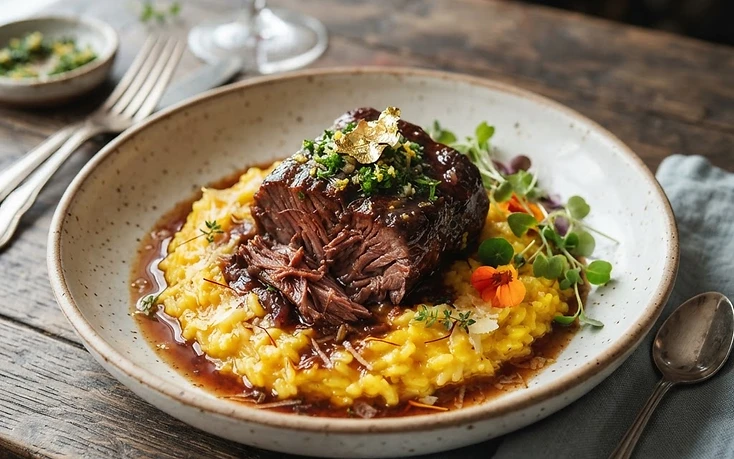
Moderne Osso Buco met gestoofde sukade en saffraanrisotto
Een verfijnde twist op de klassieke Italiaanse Osso Buco, waarbij malse gestoofde sukade wordt geserveerd over een romige, aromatische saffraanrisotto.
Allergens in this dish
Set your allergens to receive personal warnings.
Serving tip
WarmServeer direct op voorverwarmde borden om te voorkomen dat het zetmeel van de risotto gaat stollen. Plaats de gestoofde sukade in het midden en besprenkel met het ingedikte stoofvocht voor een professionele, glanzende afwerking.
Bordpresentatie
Drie manieren om dit gerecht op te maken — van doordeweeks tot sterrenklaar
Normaal
Alles naast elkaar, royale portie, saus erover.
- 1Schep Sukade aan de ene kant van het bord en Arboriorijst ernaast.
- 2Verdeel de saus over het gerecht, niet ernaast.
- 3Strooi Verse tijm over het geheel als laatste stap.
Thuiskok
Compact in het midden, saus als streep, één garnering.
- 1Schep Sukade met een ring of lepel strak in het midden van het bord.
- 2Trek een sausstreep en leg Arboriorijst tegen de rand van het bord.
- 3Leg Verse tijm hoog op het gerecht voor diepte en contrast.
Michelin
Kleine portie, veel witruimte, quenelle en drie sausdots.
- 1Portioneer Sukade tot een quenelle en plaats die net uit het midden.
- 2Zet drie sausdots op gelijke afstand en Arboriorijst als los element ernaast.
- 3Werk af met Verse tijm met een pincet, alleen waar het licht valt.
Ingredients
Serves 4
Click an ingredient for Dish Code insight
Suitable for
Tags
No tags yet. Click Edit to add one.
Where did you eat this?
Share your experience and help others
Restaurant Detective
Waar traditionele Osso Buco gebruikmaakt van kalfsschenkels, bevat deze moderne interpretatie sukade vanwege de ongelooflijke diepgang van smaak en de smelt-in-de-mond textuur na langdurig stoven. Gecombineerd met een saffraanrisotto in Milanese stijl, balanceert dit gerecht rustieke intensiteit met elegante florale tonen.
Flavor Profile
How this dish tastes, on a scale of 0-10
Cooking Techniques
The key techniques in this dish, explained by the chef
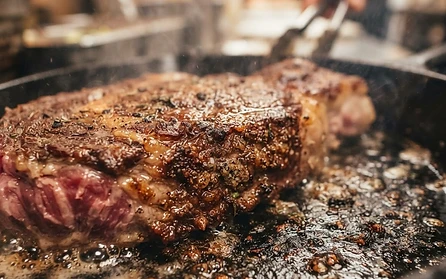
Maillard Reaction / Searing
A complex chemical process where amino acids and reducing sugars react under heat to create new flavor compounds and a browned crust. This reaction is the foundation of savory depth, adding layers of toastiness and umami to the surface of the protein. It is best achieved with dry surfaces and high thermal energy.

Braising
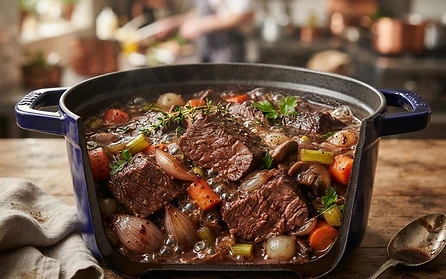
A sophisticated combination method that bridges the gap between searing and long-term stewing. By utilizing both dry heat for initial caramelization and moist, low-temperature heat for the breakdown of connective tissue, braising creates unparalleled tenderness. It is the gold standard for transforming tougher cuts into melt-in-the-mouth delicacies.

Deglazing
The precise culinary act of introducing a liquid to a searing pan to dissolve the accumulated 'fond'. This process captures the highly concentrated, caramelized flavor bits stuck to the surface of the cookware, incorporating them back into the sauce base. It is the primary method for building flavor complexity in braises and pan sauces.
Mantecatura
The final, vigorous emulsification stage of risotto where fat meets starch. By adding cold butter and parmesan off-heat, the chef creates a stable, glossy emulsion that gives the rice its signature velvety mouthfeel. It is a technical feat of temperature control and mechanical stirring.